
The discovery was met with both awe and a sense of responsibility. The scientist and the local community worked together to protect this natural wonder, ensuring that its beauty could be appreciated by future generations while preserving its essence.
This story, while fictional, illustrates how a term like "Violet Gloryholeswallow" could inspire curiosity and lead to the discovery or creation of meaningful narratives across various fields. Without a specific context, the possibilities are endless, and the term invites exploration and imagination. violet gloryholeswallow
One scientist, driven by a lifelong passion for botany and the unexplained, decided to embark on a journey to uncover the truth behind Violet Gloryholeswallow. Through extensive research and local guides, she finally stumbled upon the location, only to find that the real marvel was not just the plant but a natural sinkhole with walls that shimmered in shades of violet during sunset, creating a "gloryhole" effect where light seemed to be swallowed by the depths of the earth. The discovery was met with both awe and
The story goes that only a few have seen this phenomenon, as the location of Violet Gloryholeswallow is hidden and protected by local communities who consider it sacred. Over the years, adventurers and scientists have tried to find it, but the descriptions of how to get there are cryptic and vary widely. Without a specific context, the possibilities are endless,
Imagine a remote area, known for its stunning natural beauty and home to a variety of rare plants and geological formations. Among the botanists and naturalists, there's a legend about a place called "Violet Gloryholeswallow," a rare and elusive location rumored to host a plant with vibrant violet flowers. This plant, if it exists, is said to have unique properties, including the ability to change the color of its surroundings at dusk, creating a breathtaking natural spectacle.
If "Violet Gloryholeswallow" were a term related to botany or horticulture, it might refer to a rare or uniquely named plant. Plants often have names that reflect their appearance, properties, or the names of people who discovered them. A plant with "violet" in its name might have violet-colored flowers or parts. The term "gloryholeswallow" could be metaphorical, describing the shape of the flower or how light interacts with it, or it could be part of a colloquial or regional name. 2. Geological or Geomorphological Features In a geological context, "Violet Gloryholeswallow" could hypothetically refer to a unique rock formation, a cave, or a natural sinkhole with distinctive violet-colored minerals or unique optical effects. Many natural features have colorful names based on their appearance or mythological stories. 3. Cultural or Fictional References In fiction, games, or internet culture, "Violet Gloryholeswallow" might be a character, a place, or an object with significance to the story or community. This could range from a fantastical creature in a role-playing game to a title of a fanfiction story. 4. Scientific Discovery If "Violet Gloryholeswallow" were related to a scientific discovery, it might be a placeholder name, a code name, or a colloquialism for a project or finding that hasn't been widely recognized or named officially. Scientists often use temporary names for discoveries until they are formally named. Speculative Story Given the speculative nature of this term, let's create a story that could fit any of these contexts:
Add Sense for Chrome works in both the build-in Sense client and in mashups using the Capabilities APIs
Charts displayed with the API through getObject and visualization.show will be tagged.
Used app(s) will be displayed in the bottom right corner.
Properties and other buttons will work just as in the client.
If your mashup shows charts from more than one app, all will be listed.
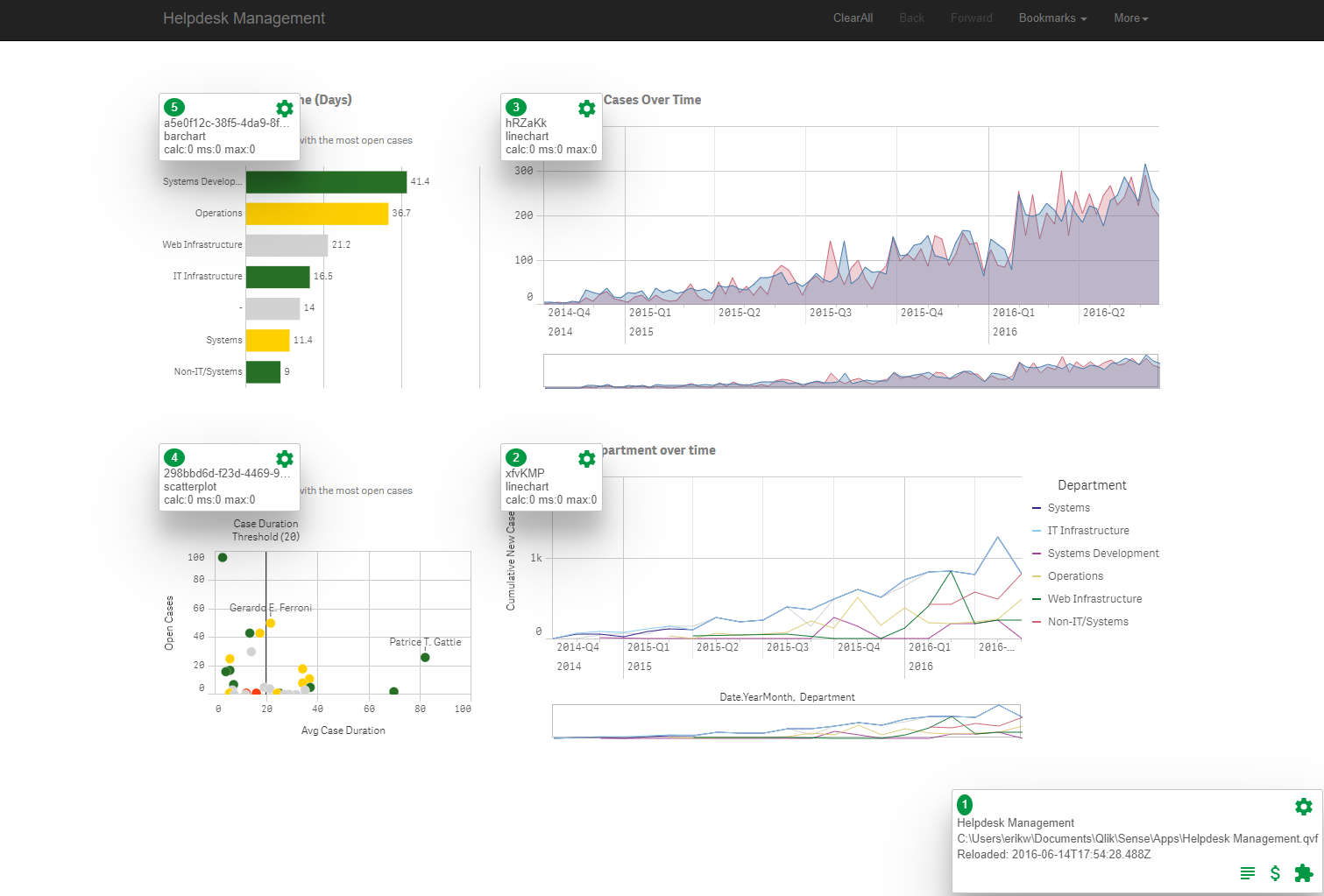
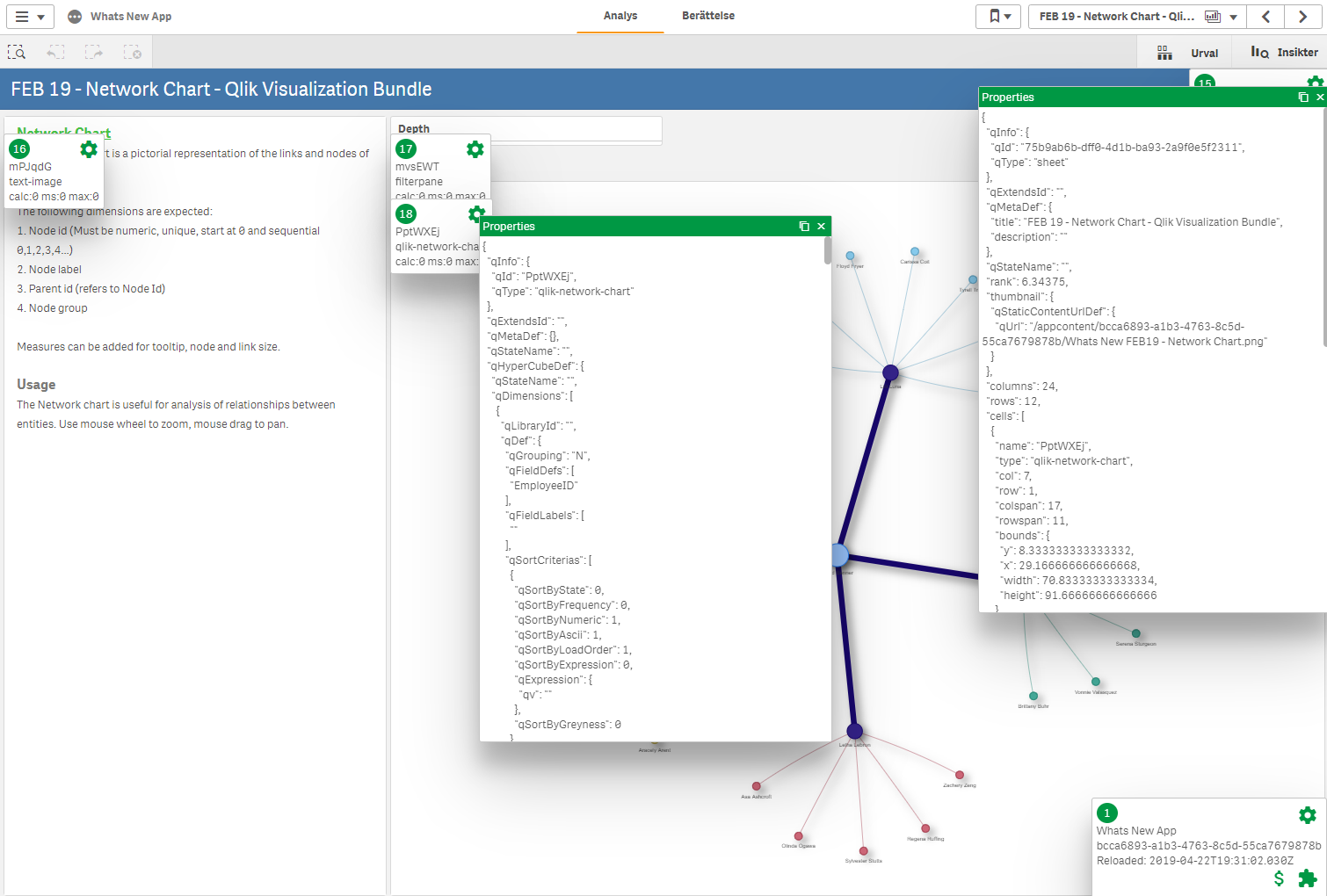
For all charts, sheets and the app you can click on the cogwheel.
That will display the properties for the object.
Use this to troubleshoot or to investigate what settings produce this chart.
You can display several objects properties at the same time, to make comparisons.
Properties can also be copied to clipboard.
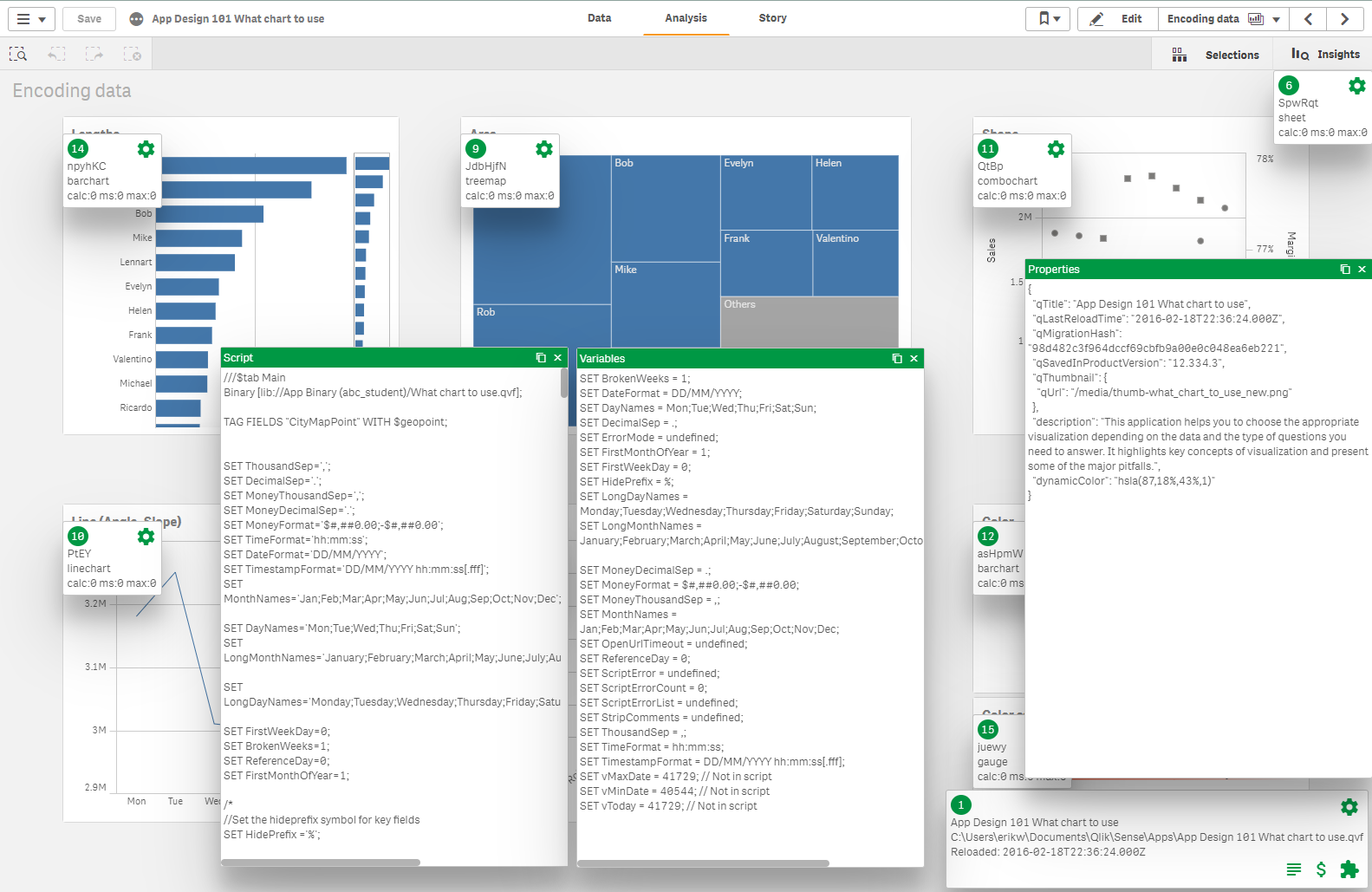
From the app box you can inspect the script, variables and app properties.
Windows can be open at the same time and moved.
You can also copy window contents, complete or partly, to the clipboard.
If you do not have access to the script the script button will not be available.
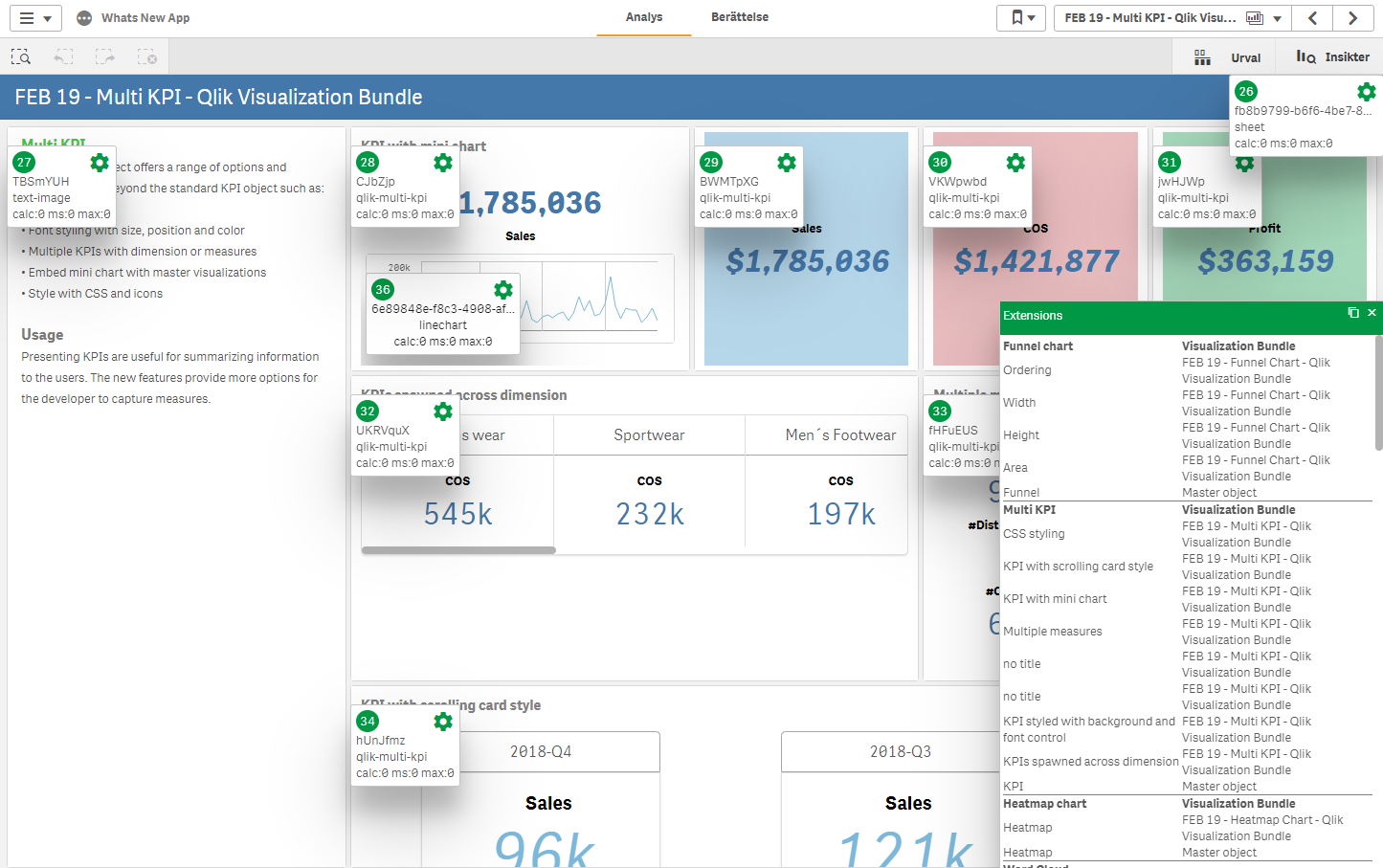
You can also easily see what extensions and charts are used in your app.
Just click on the extensions button in the app info box.
You will get a list of all axtensions and built-in charts are used in your extension, with title and sheet title
Master objects are also included.
The extension can also help you find performance problems.
When you enable the extension on a page, whether it's the standard client or a mashup, it will start recording recalculation times.
Every time an object is revalidated then extension will register time elapsed for recalculation.
It will also count how many revalidations has occured.
If the object is no longer on the screen, the extension will continue to monitor recalculations, so when you re-enable it you will get all the statistics.