
Speed
Lightning-fast access to your menu bar items is now even better. Get instant access to your hidden menu bar items simply by swiping or scrolling in the menu bar, clicking on the menu bar, or if you prefer, simply hovering.
Bartender is an award-winning app for macOS that for more than 10 years has superpowered your menu bar, giving you total control over your menu bar items, what's displayed, and when, with menu bar items only showing when you need them.
Bartender improves your workflow with quick reveal, search, custom hotkeys and triggers, and lots more.
Lightning-fast access to your menu bar items is now even better. Get instant access to your hidden menu bar items simply by swiping or scrolling in the menu bar, clicking on the menu bar, or if you prefer, simply hovering.

Access the menu bar items otherwise hidden by the notch on MacBook Air and Pro screens. Bartender will automatically hide your currently shown menu bar items when needed to create room to show the items hidden by the MacBook Air and Pro screens notch, giving you access to all your menu bar items.
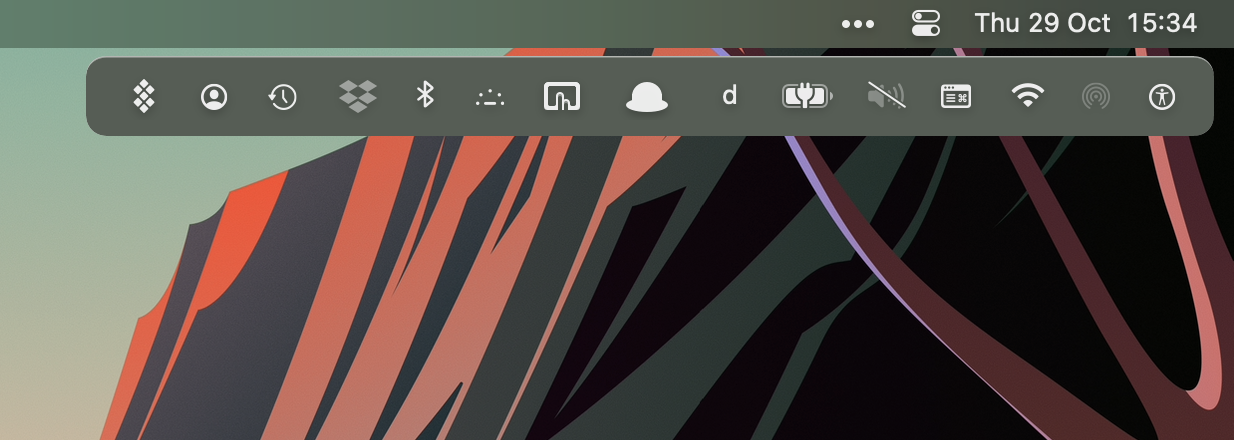
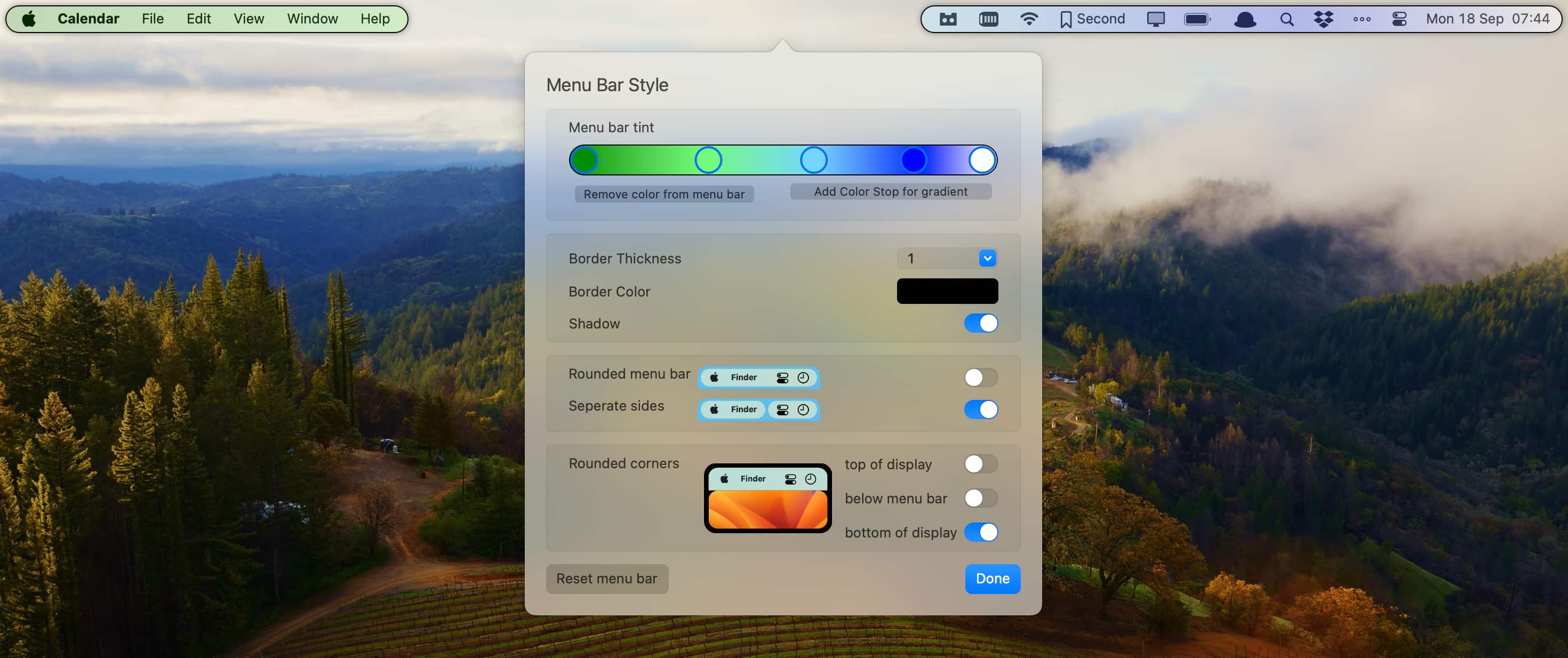

Make your menu bar your own, with menu bar styling you can:

Combine multiple menu bar items into one customisable menu bar item, and have quick access to all the menu bar items within.
For example group all your cloud drive apps together like Dropbox, OneDrive, Google Drive.
Have a group for connection related items such as Wi-Fi and VPN.
And another for media related items, like volume, media controls, airplay.
This can be a great way to have access to all your menu bar items on a MacBook Pro or Air with limited menu bar space due to the screen notch.
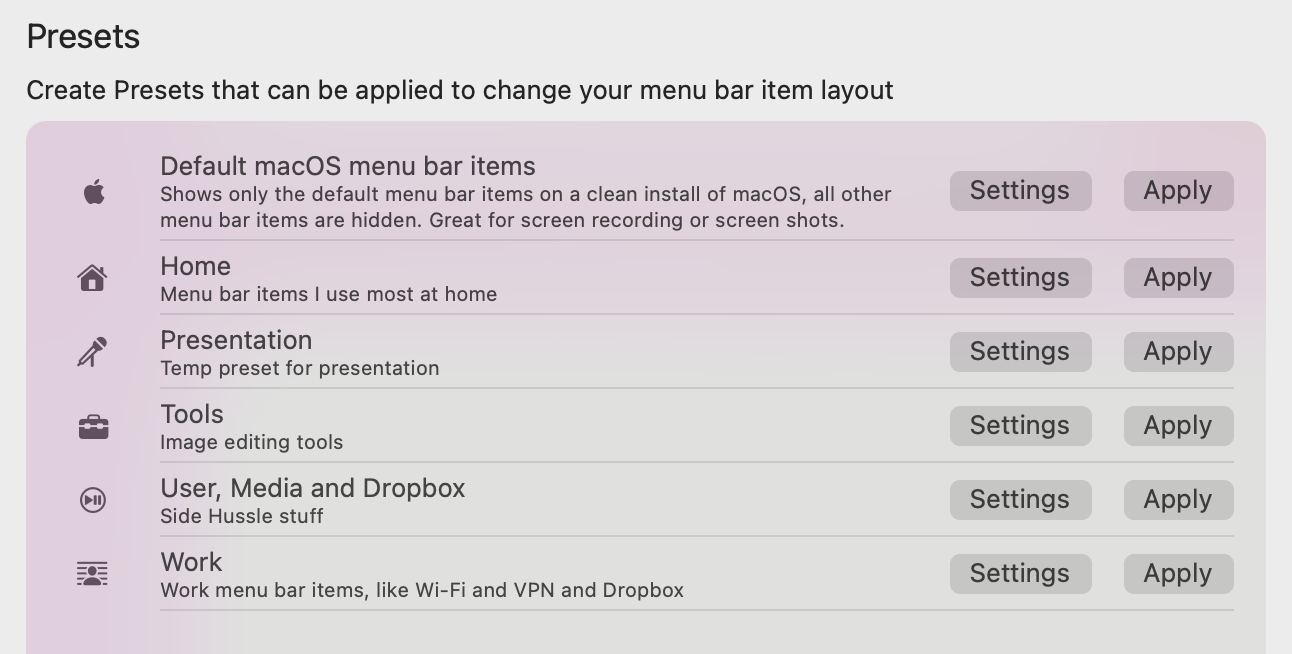
Create as many presets as you want and always have the right menu bar items available for your current workflow.
Show the macOS default menu bar items when recording your screen or screen sharing
Show work specific menu bar items in work hours, then social media items when at home... the possibilities are endless.
Presets can be automatically applied via triggers and also by macOS Focus modes.
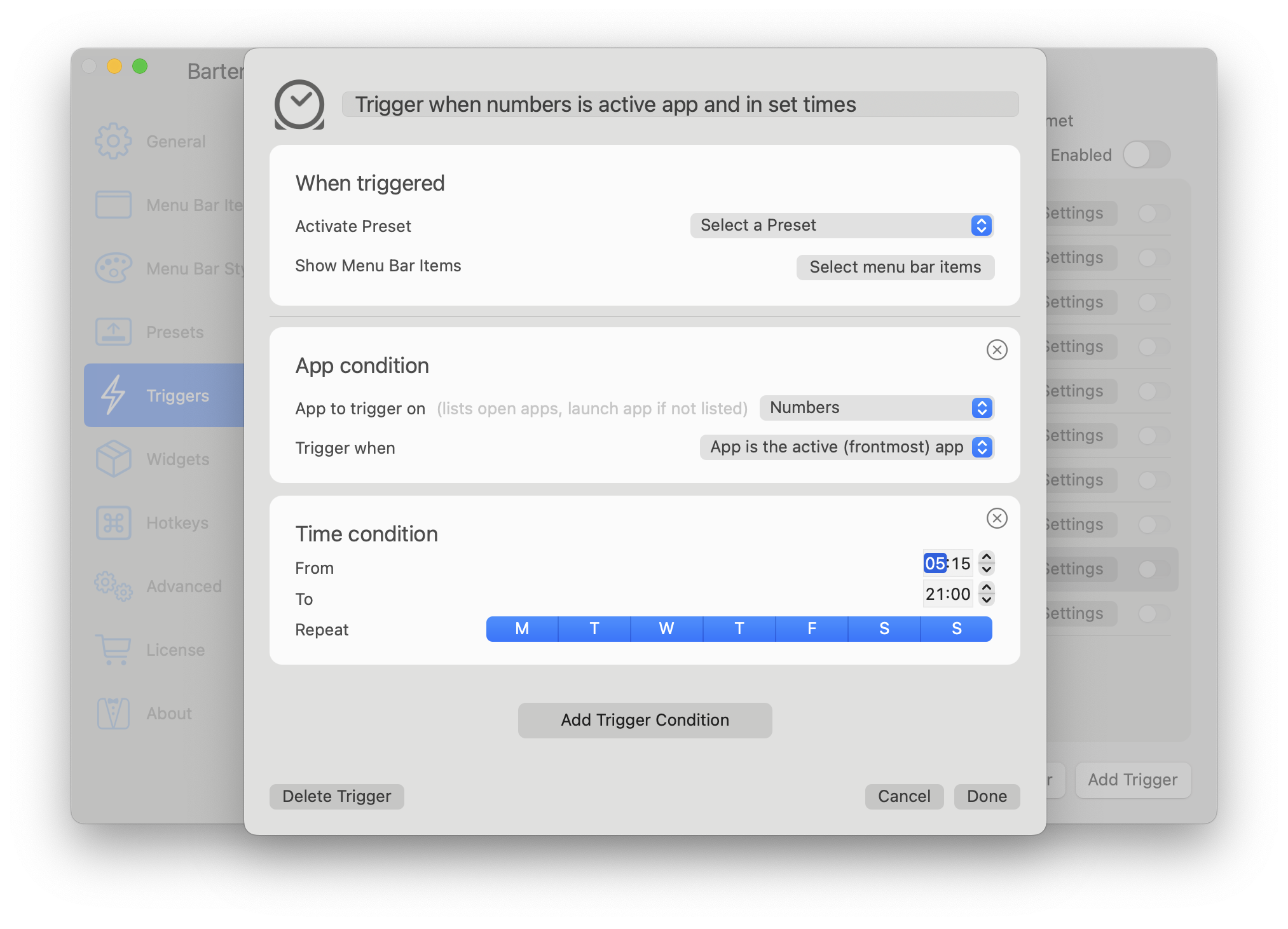
With a completely new Trigger system
you can apply a preset automatically, or show a set of menu bar items whenever your trigger conditions are met. Triggers conditions currently include
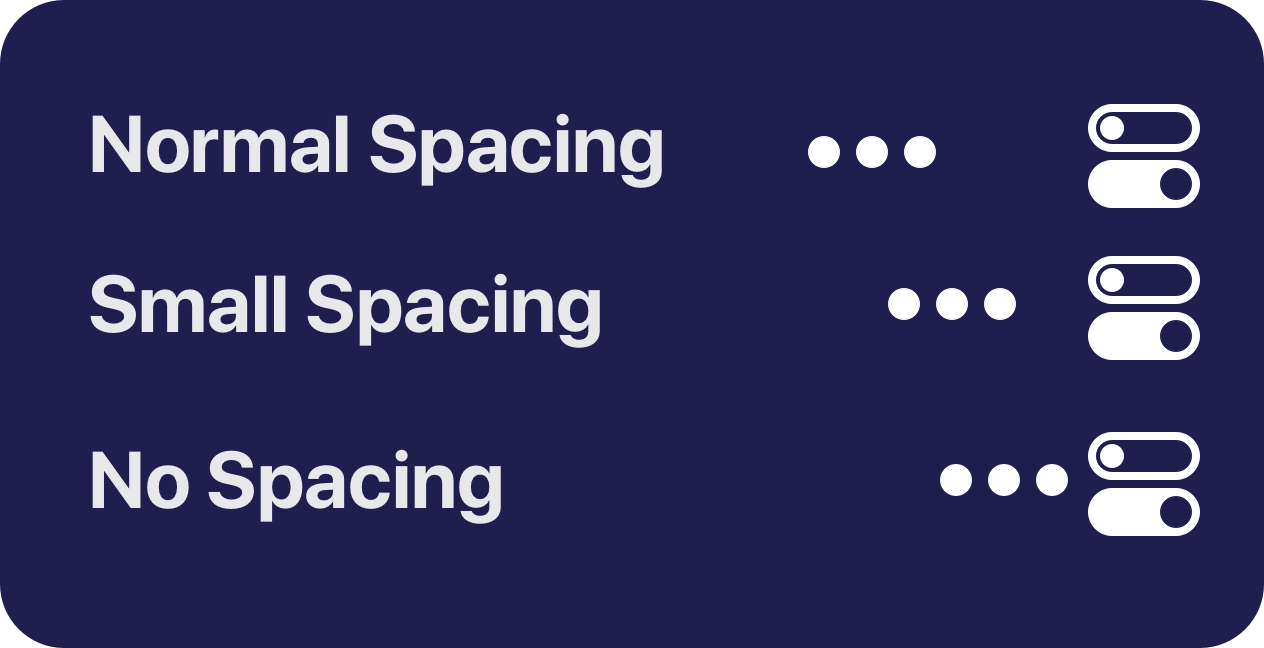
Reduce the space between menu bar items using Bartender, allowing you to have more menu items onscreen before reaching the macbook notch. Or just purely for style.
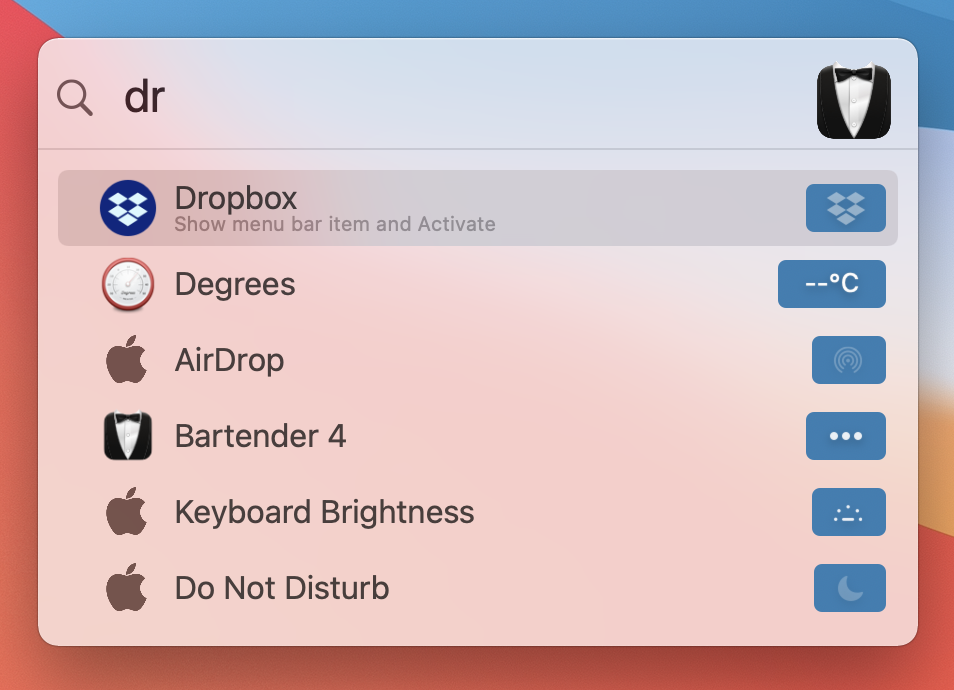
Quick Search will change the way you use your menu bar apps.
Instantly find, show, and activate menu bar items, all from your keyboard.
* the macOS screen capture menu bar item can show when using this. more info
Bartender 5 is designed for all the great changes in macOS Sonoma.
Bartender 5 runs native and lightning-fast on Apple Silicon and Intel macs.
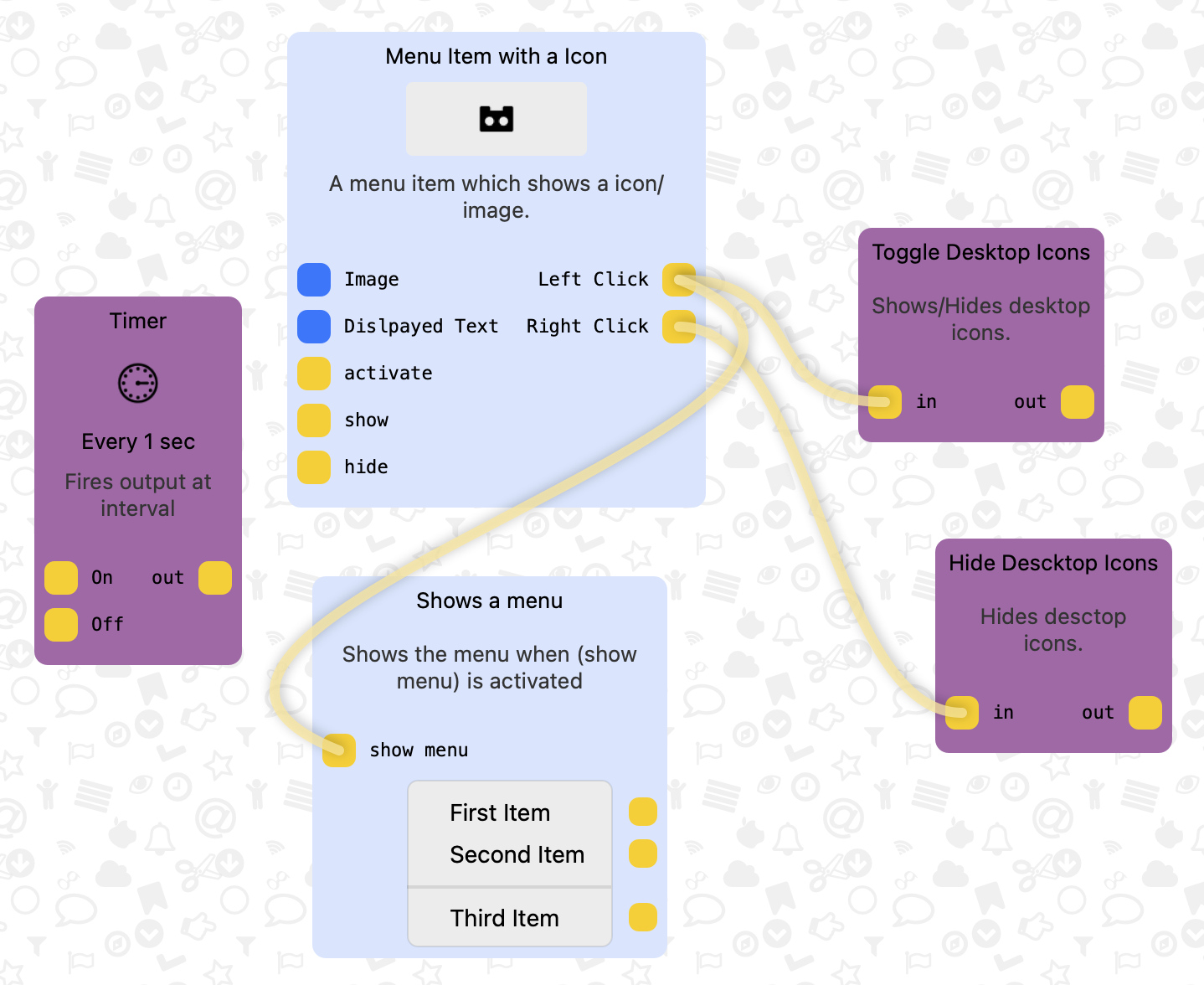
Create your own menu bar items
With Bartender widgets you can create your very own custom menu bar items, that trigger pretty much any action you want, no coding required.
Add hotkeys for any menu bar item; this can show and activate any menu bar item via any hotkey you assign.
With Spacers, your menu bar is uniquely your own, with the ability to customize menu item grouping and display labels or emojis to personalize your menu bar.
Use Apple Script to show and activate menu bar items. Fantastic for some advanced workflows.
Swap shown items for your hidden ones to take up less menu bar space, allowing you to have more menu bar items on a smaller screen.
You can choose where new menu items will appear in your menu bar, shown for instant access, or hidden for less distraction.
The first five episodes of Prison Break Season 5 succeed because they understand a fundamental rule of revival: nostalgia alone is not enough. They honor the original series’ blueprint—the intricate escape, the double-crosses, the ticking clock—while completely reinventing its emotional core. The prison is no longer a building; it is a false identity, a geopolitical trap, and a moral compromise. By the end of Episode 5, the audience has what it came for (a spectacular escape), but it is left with something more valuable: a broken hero who must now break out of his own darkest self. For any writer or fan analyzing how to bring a dead franchise back to life, these five episodes offer a perfect case study in raising the stakes by first tearing down the legend.
No Prison Break escape works without a team, and these two episodes methodically reassemble the ensemble. We see the return of Benjamin "C-Note" Miles, now a military contractor, and the reluctant extraction of Theodore "T-Bag" Bagwell, who receives a mysterious letter implying he has a son. These episodes are useful for demonstrating how the show handles its problematic legacy. T-Bag is not reformed, but he is given a pragmatic purpose. The show wisely avoids moral simplification; everyone is a tool for survival. Meanwhile, in Ogygia, Michael begins to manipulate the prison’s factions—the ordinary inmates, the terrorists, and the corrupt guards—using his signature tattoo-less (but equally brilliant) tactical mind. Episode 4 ends with a classic Prison Break cliffhanger: a lethal gas attack on the prison, forcing a premature, desperate escape. prison break 5 episodes
Reviving a beloved TV series years after its finale is a high-stakes gamble. For Prison Break , which ended in 2009 with a seemingly conclusive (and tragic) finale, the 2017 revival, Prison Break: Season 5 , faced the daunting task of resurrecting not just a dead character—Michael Scofield—but also the show’s signature tension. The first five episodes of this nine-episode season function as a masterclass in the “resurrection arc.” They do not simply reboot the franchise; they meticulously rebuild its core mythology, redefine its hero, and prove that the show’s central engine—the elaborate, desperate escape—can be successfully transplanted from a US prison to the crucible of a Middle Eastern civil war. The first five episodes of Prison Break Season