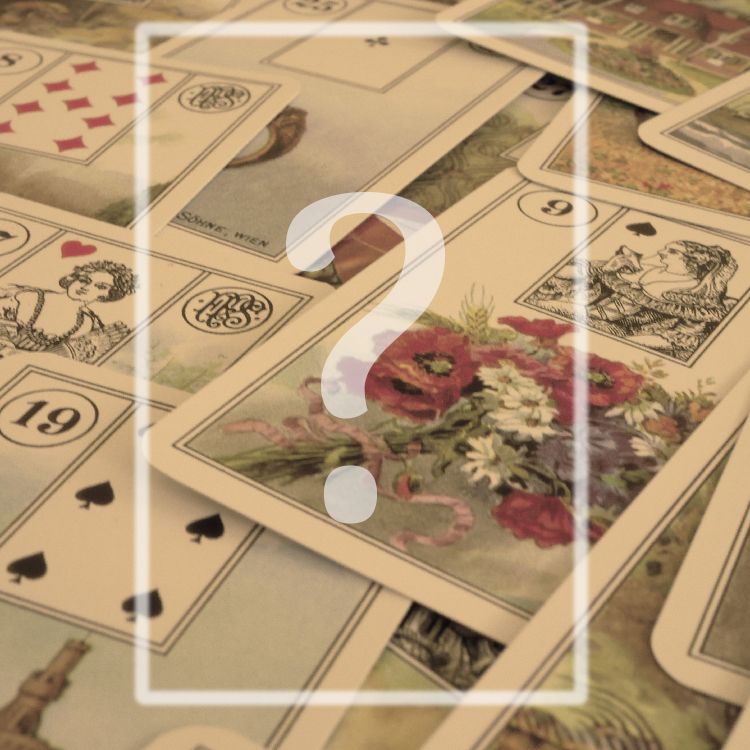
The Petit Lenormand is probably the most fascinating fortune-telling deck inherited from the 19th century. Inspired by the famous Mademoiselle Lenormand, this 36-card deck is known for its amazing ability to predict the future in a concrete and direct way. While other oracles can be vague, the Lenormand gives honest answers to daily life questions (love, work, money).
At first, it is tempting to see the Lenormand as a simpler system than the Tarot. With only 36 cards using clear symbols (a Dog, a Tree, a Key...), it seems easier to learn than the 78 complex cards of the Tarot. However, this simple look hides a clever mechanic. czech homeorgy
To master this deck, learning keywords by heart is not enough. The real power of the Petit Lenormand lies in its unique grammar: The desperation phase
Download the PDF eBook version (80 pages) of this complete guide for free. Included: the 36 classic cards + the 8 bonus cards from the Gilded Reverie + thematic interpretations. Social Dynamics: The "Debate" Culture Czechs are not
This guide was created to save you time. You will find below the full meaning of the 36 cards. For each card, I first give you the classic and traditional view (to have solid basics), followed by my modern interpretation from my personal practice, to help your readings flow better.
The desperation phase. Someone remembers they have a pack of Instant noodles or párek v rohlíku (frankfurter in a bun). The true hero of the night is the guest who brings a tub of bramborový salát (potato salad) leftover from Christmas, regardless of the season. Social Dynamics: The "Debate" Culture Czechs are not loud, back-slapping partiers. The entertainment is argument .
The "Studená Kuchyně" (Cold Kitchen). The host lays out obložené chlebíčky (open-faced sandwiches with ham, egg, and pickles), utopenci ("drowned men" – pickled sausages), and hard-boiled eggs. This is polite eating.
At a Czech homeparty, you will find heated, intellectual debates about politics (everyone hates the current government), hockey (everyone hates the referees), and philosophy (everyone is a little bit cynical). Unlike aggressive shouting matches, these are considered bonding. If you aren't debating, you are "mute as a ghost." The party ends abruptly and practically. The last tram or bus (the poslední spoj ) leaves around 11:30 PM or 12:30 AM. Half the guests will panic-check their phone, chug their remaining beer, and run out the door without saying goodbye properly.
The survivors who live walking distance will stay until the rohlíky (bread rolls) arrive at the corner grocery store at 5:00 AM. They will then eat the rohlíky raw on the street before walking home in the dawn light. The Czech homeparty is not about luxury. It is not about Instagram aesthetics. It is about pohoda (comfort/well-being). It is a democratic, low-stakes event where a plastic bottle of bitter, a deck of worn cards, and concrete walls are all you need to build a night you’ll vaguely remember—and a morning you’ll profoundly regret.
Never refuse a shot of Becherovka offered by the host. But learn to say "Dobrou chuť" before drinking it. It’s weird. It’s Czech. It works. Na zdraví!
The simplicity of the Lenormand cards can be deceptive. Following the classical interpretation of the cards, I think that beginners should still do some real learning of the Lenormand system to produce solid and consistent readings.
I hope that with the personal elements I propose for each of the cards, this progression will be facilitated. Feel free to comment and share your own vision of the cards.
Each card in the (Petit) Lenormand is a universe of symbols and meanings that intertwine with our own stories. Your personal interpretation enriches the fabric of our collective understanding. Which card resonates the most with you? Do you have a story or a personal interpretation that could shed new light on the mysteries of the (Petit) Lenormand?
I invite you to share your discoveries and stories in the comments below. Your contribution is valuable and can become a beacon for someone else on their path of discovery.
The desperation phase. Someone remembers they have a pack of Instant noodles or párek v rohlíku (frankfurter in a bun). The true hero of the night is the guest who brings a tub of bramborový salát (potato salad) leftover from Christmas, regardless of the season. Social Dynamics: The "Debate" Culture Czechs are not loud, back-slapping partiers. The entertainment is argument .
The "Studená Kuchyně" (Cold Kitchen). The host lays out obložené chlebíčky (open-faced sandwiches with ham, egg, and pickles), utopenci ("drowned men" – pickled sausages), and hard-boiled eggs. This is polite eating.
At a Czech homeparty, you will find heated, intellectual debates about politics (everyone hates the current government), hockey (everyone hates the referees), and philosophy (everyone is a little bit cynical). Unlike aggressive shouting matches, these are considered bonding. If you aren't debating, you are "mute as a ghost." The party ends abruptly and practically. The last tram or bus (the poslední spoj ) leaves around 11:30 PM or 12:30 AM. Half the guests will panic-check their phone, chug their remaining beer, and run out the door without saying goodbye properly.
The survivors who live walking distance will stay until the rohlíky (bread rolls) arrive at the corner grocery store at 5:00 AM. They will then eat the rohlíky raw on the street before walking home in the dawn light. The Czech homeparty is not about luxury. It is not about Instagram aesthetics. It is about pohoda (comfort/well-being). It is a democratic, low-stakes event where a plastic bottle of bitter, a deck of worn cards, and concrete walls are all you need to build a night you’ll vaguely remember—and a morning you’ll profoundly regret.
Never refuse a shot of Becherovka offered by the host. But learn to say "Dobrou chuť" before drinking it. It’s weird. It’s Czech. It works. Na zdraví!
Copyright © www.tarotquest.co